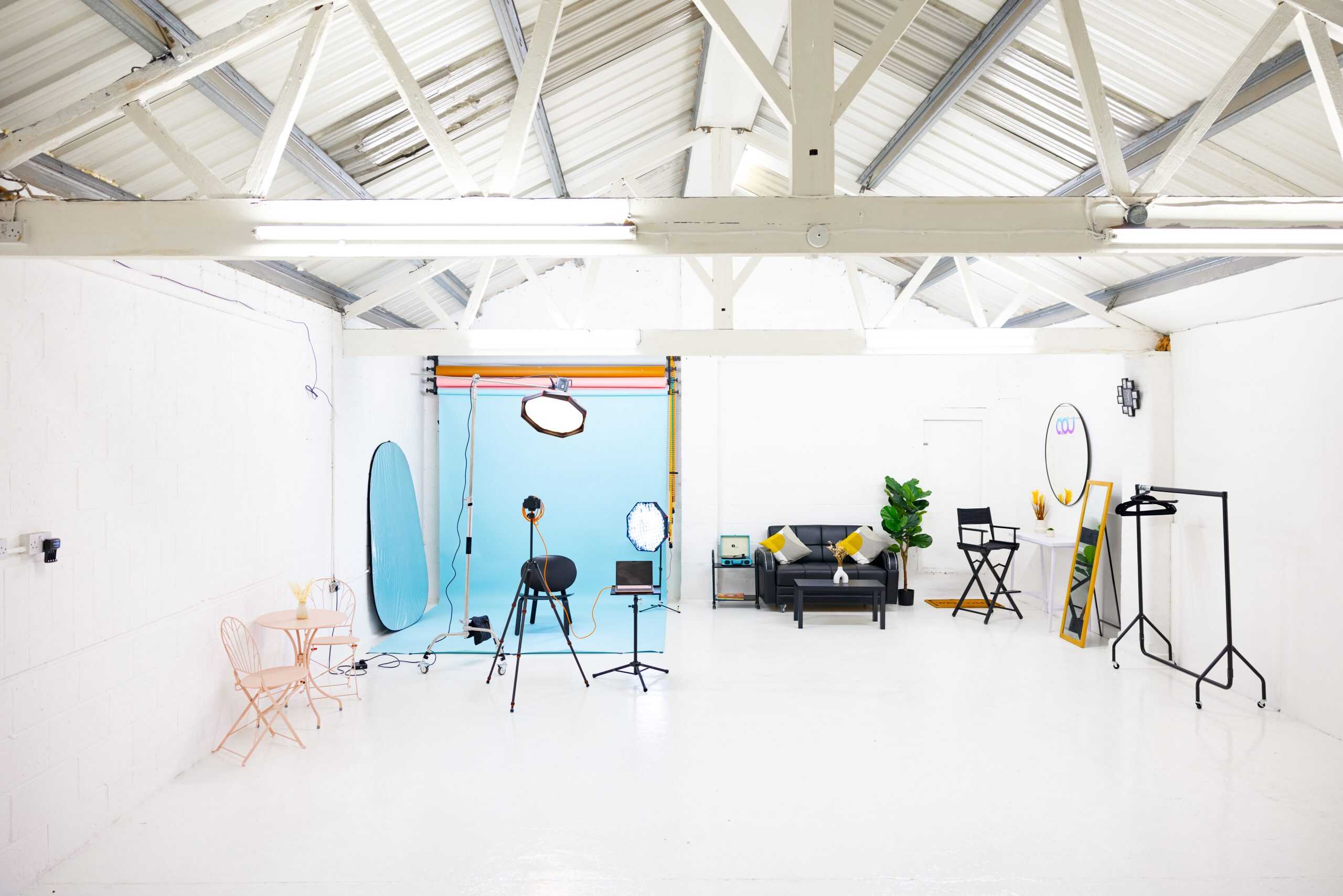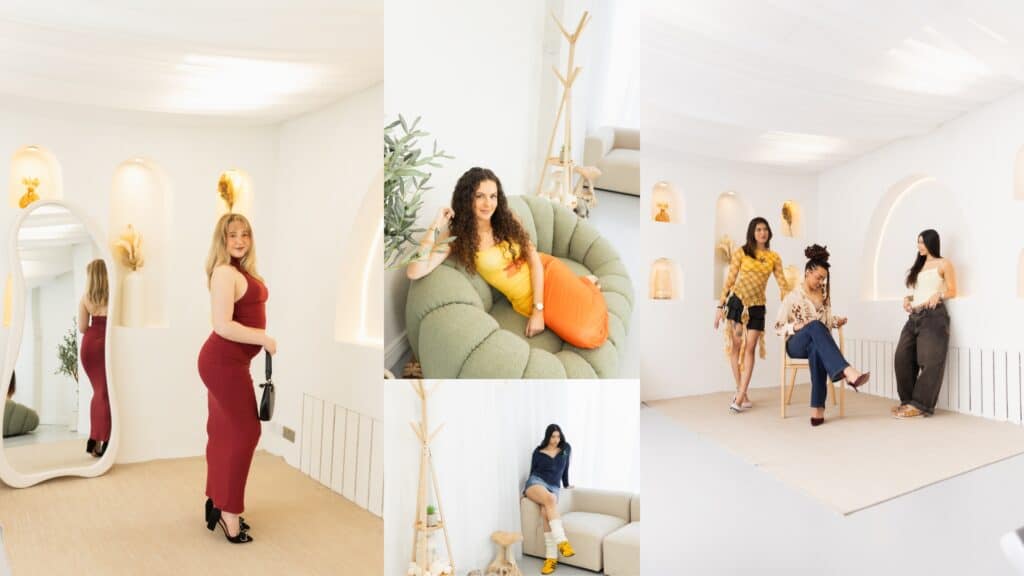
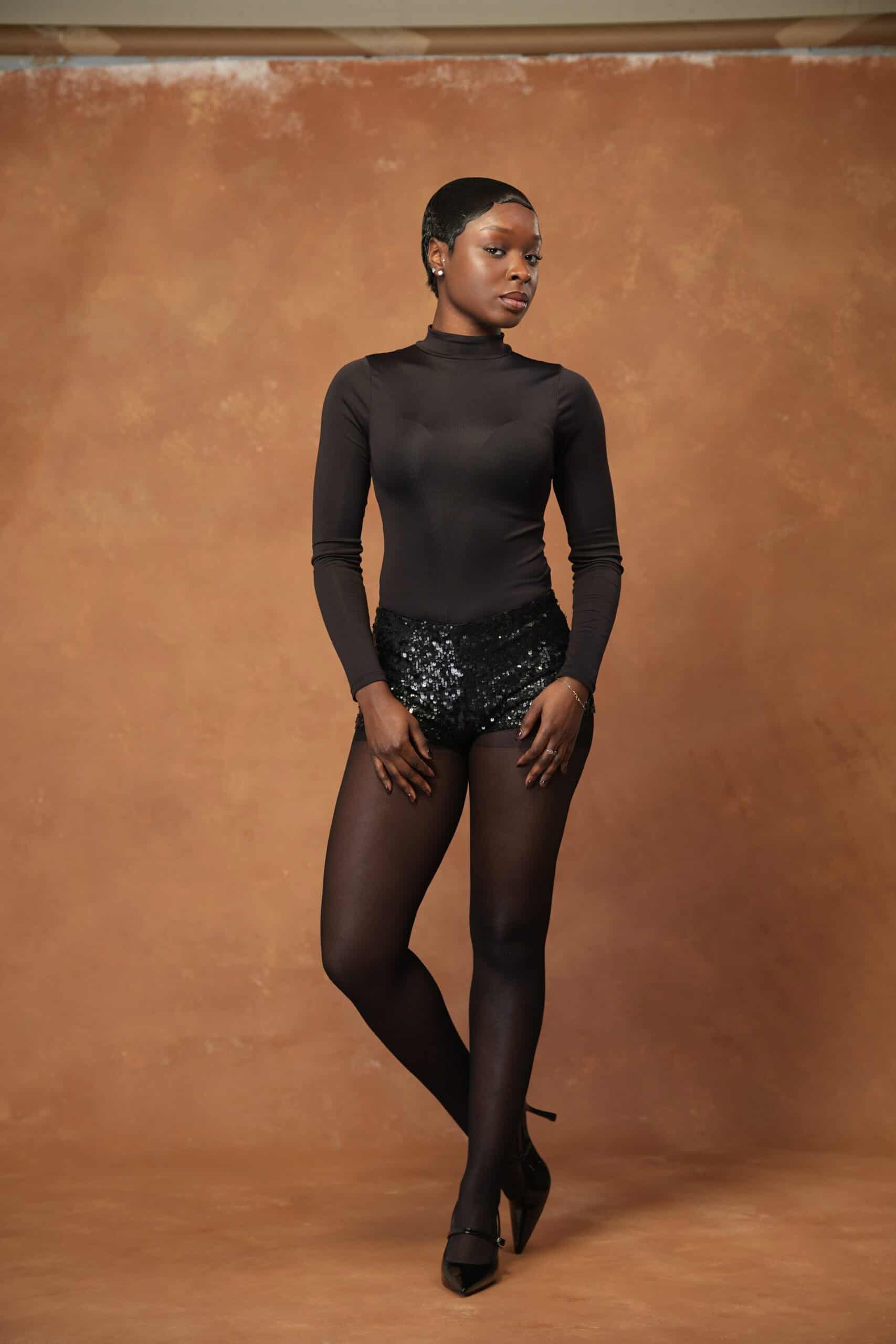
A boudoir photoshoot usually runs for one to two hours and includes a settling-in period, outfit changes, guided posing and a private image selection afterwards. You don’t need modelling experience or a clear idea of poses beforehand — the photographer directs the session throughout, and the studio is set up to be private, warm and unhurried.
Most people booking their first boudoir session are nervous about one of two things: not knowing how to pose, or feeling exposed in front of a camera. Both concerns are normal, and both are handled by how the session is structured, not by anything you need to prepare mentally beforehand.
Before you arrive
Once your session is booked, we’ll talk through the details — the style you’re drawn to, how much skin you’re comfortable showing, and whether you’re bringing your own outfits or borrowing from the studio wardrobe. This is the point to share any reference images, since they help shape lighting and posing choices ahead of the day rather than mid-session.
We’ll also send a short prep guide covering timing, what to bring and how to prepare skin and hair, so nothing is left to figure out on arrival.
How the studio is set up for privacy
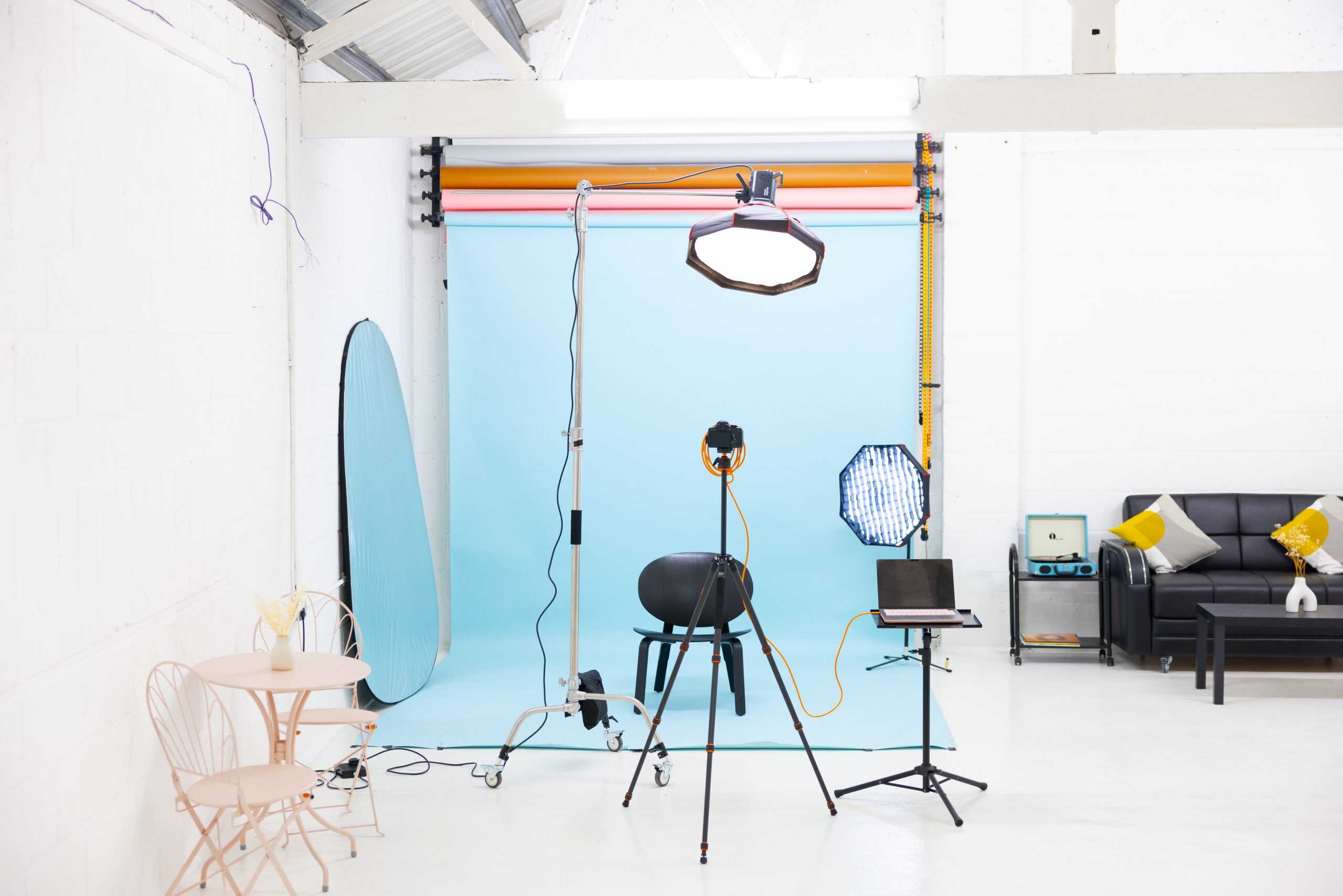
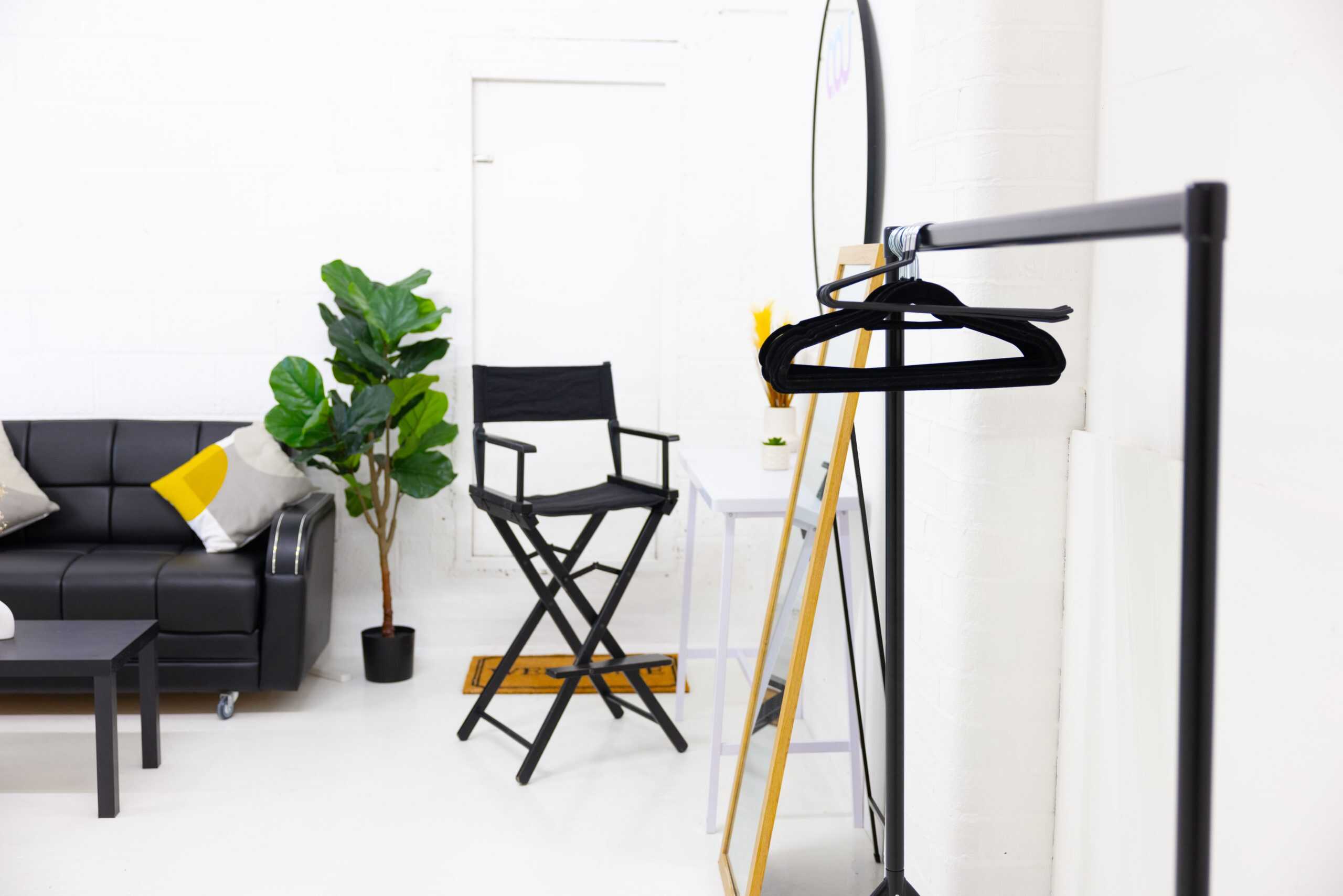
The space is closed to anyone outside your session — no shared waiting areas, no passing traffic through the shooting room. There’s a private changing area, and only the photographer (and stylist, if one is booked) is present during shooting. Doors are shut, blinds are down, and the pace is set by you.
How posing is guided
You are not left to invent poses. Direction is specific and incremental — weight onto the back leg, chin forward and down, shoulder dropped, hand placement adjusted a few centimetres at a time. It sounds mechanical written down, but in the room it feels more like being gently repositioned than performing.
We also show you images on the back of the camera as we go. Seeing a shot that works does more to settle nerves than any amount of reassurance beforehand, and it means you’re never waiting until the gallery to find out whether something is working.
What happens during outfit changes
Sessions typically move through two to four looks, with a change of ten to fifteen minutes between each once lighting is reset. That gap is a natural pause point — sit down, have a drink, ask questions about what’s next. Nobody is rushed through the changing space, and if a look isn’t working once it’s on, we’ll say so and adjust rather than shoot it out of politeness.
How much control you have
Everything is your decision: what you wear, how much you show, which poses you’re comfortable with, and when you want to stop. Changing your mind partway through — skipping a planned look, covering up more than discussed, ending a section early — is common and never a problem. Speaking up in the moment is far easier to act on than raising something after the gallery arrives.
Breaks, comfort and communication
There is no fixed pace beyond what suits you. If you need a break, a drink or a few minutes alone in the changing room, say so. If a pose feels physically uncomfortable or exposes more than you intended, tell us immediately — it’s simple to adjust while the lighting is still set, much harder to fix after the fact.
How image selection works
A few days after your session, you’ll be invited to view your private gallery and choose your favourites. There’s no pressure and no time limit. A method that works well: go through once quickly and mark anything that gets an immediate positive reaction, then go back and narrow down. Instinct first, deliberation second, tends to produce a better final set than agonising over each frame.
Common mistakes to avoid
- Over-preparing poses in advance. Arrive with reference images if you have them, but let the photographer guide the actual posing.
- Booking on a day packed with other commitments. Leave time either side so nothing feels rushed.
- Staying quiet about discomfort during a pose. Say something immediately — it’s easier to fix in the moment.
- Bringing six or more outfit changes to a short session. Two to four decided looks fits most session lengths comfortably.
- Deciding on final images the moment the gallery arrives. Go through once for instinct, then again to narrow down.
Boudoir photoshoot checklist
- Confirm session length and how many outfit changes it comfortably fits.
- Decide in advance how much you want to show, and share this before the day.
- Bring or arrange skincare and hair prep in the days before.
- Send any reference images ahead of the session.
- Arrive in loose, easy-to-remove clothing to change into your first look.
Boudoir photography in Nottingham
Sessions run in a private studio in Hucknall, easily reached from across Nottinghamshire including Mansfield, Arnold, Beeston and West Bridgford. Parking is available nearby, which matters if you’re travelling with outfit changes or props. Since everything happens indoors under controlled lighting, weather has no bearing on the shoot itself.
How AOU Studio approaches boudoir sessions
The question we hear most before a first boudoir session is some version of “what if I don’t look natural?” The honest answer is that looking natural isn’t something you have to bring — it’s the result of good direction, incremental posing and a private, unhurried room. Your job is to arrive and communicate; the rest is ours.
The pattern we notice most often: the look someone is most nervous about beforehand is very often the one they choose from the gallery afterwards. We schedule those looks in the middle of the session rather than first or last, once nerves have settled but before fatigue sets in.
Feeling nervous? Read how to feel confident during a boudoir photoshoot, or book your session when you’re ready.
Frequently asked questions
Do I need to know how to pose for a boudoir photoshoot?
No. Posing is guided in small, specific adjustments throughout the session. No prior experience is expected.
Who sees the images?
Only you, unless you choose to share them. Galleries are private and viewed on your own time.
Can I bring my own outfits?
Yes, and most clients do. A studio wardrobe is also available if you’d like to borrow pieces.
What if I feel nervous on the day?
That’s expected, and the session is structured around it — starting with the simplest look, showing images early, and adjusting pace to however you’re feeling.